- अनामनगर काठमाडौँ
- infobikalpa21@gmail.com

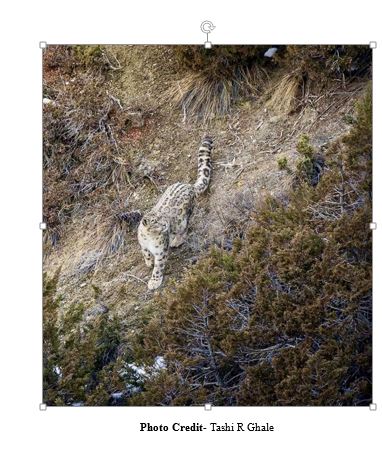
High in the wind-swept cliffs of the Himalayas lives a predator so elusive that many mountain communities rarely see it, yet feel its presence every winter. The Snow Leopard has long been known as the “Ghost of the Mountains” a name shaped as much by folklore as by the realities of living alongside it.
For herders in the highlands of Nepal, the snow leopard is both a symbol of wilderness and a source of anxiety. For scientists and conservationists, however, it represents something entirely different: the guardian of fragile mountain ecosystems.
So, which is it; ghostly menace or hidden saviour?
A shadow that steals in the night
For many high-mountain families, livestock is life.
In places where crops barely grow and markets lie days away, goats and sheep represent food, income, and survival. Losing even a few animals can be devastating. Then comes the night when the ghost visits.
A snow leopard slips silently across a rocky ridge and into a livestock enclosure. In Himalayan pastoral communities, herder may find several animals dead, sometimes far more than a leopard can even eat. This behaviour, known as surplus killing, making conservation deeply an emotional and economic issues rather than just ecological one. In the bitter cold of the Himalayas, such losses are not easily forgiven. It is in these moments that the snow leopard becomes less of a legend and more of a nightmare.
The mountain spirit
Yet the same communities that suffer these losses often hold deep cultural beliefs about the animal.
Among Tibetan Buddhist communities in the Himalayas, killing wildlife, especially rare predators, is considered spiritually wrong. Some elders say the snow leopard is a messenger of the mountains, a creature that appears only when the land is healthy. In many villages, people hesitate to even speak its name directly. Instead, they refer to it in respectful terms:
“the mountain’s cat,”
“the silent one,”
or simply “the ghost.”
This blend of fear and reverence has helped the species survive for centuries in landscapes where people and predators share the same harsh environment.
Why scientists call it a saviour?
While local folklore paints the snow leopard as a mysterious spirit, scientists see it as something equally powerful, an ecological guardian.
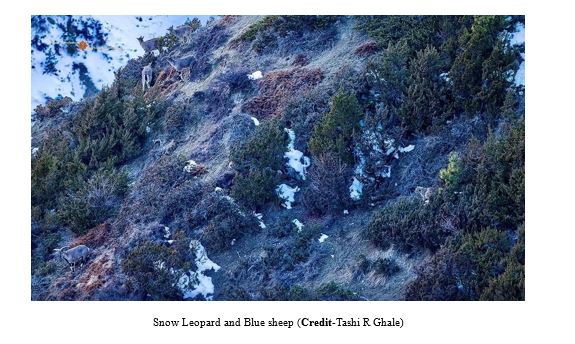
Snow leopards, estimated 397 of total in Nepal holds one of the most important strongholds for the species globally, regulate populations of wild prey such as blue sheep and ibex. Healthy snow leopard populations therefore help maintain the balance of high-mountain habitats. These ecosystems also protect watersheds that supply rivers flowing across Asia. In other words, the survival of this single predator is tied to the health of landscapes that support millions of people. Being an umbrella species, it protects many Himalayan species like Himalayan Wolves, musk deer, and numerous alpine birds. Therefore, Scientists warn that disappearing of this leads to ecological imbalance leading overgrazing and declining biodiversity over the landscape. This is why organisations like the National Trust for Nature Conservation and the Snow Leopard Trust work tirelessly to protect the species.
To them, saving the snow leopard means saving the mountains themselves.
Learning to live with the ghost
In recent years, conservation in Nepal has shifted toward a simple idea: coexistence.
Instead of asking communities to tolerate losses, conservation programs now try to reduce them. Predator-proof livestock corrals, insurance schemes, and community-based conservation have begun changing attitudes toward the animal. In some areas, snow leopard tourism is even bringing new income to remote villages. The same animal that once symbolised loss is slowly becoming a symbol of pride. But coexistence is not simple.
The mountains are changing. Climate change is pushing ecosystems upward, and human activities continue to expand into wildlife habitats. At the same time, decline in the prey species are forcing the predators close to the villagers in search of food. These pressures are making encounters between people and predators more frequent.
Between myth and survival
Today, Nepal holds one of the world’s most important populations of snow leopards. Yet their future remains uncertain. Perhaps the greatest challenge is not protecting the animal itself, but reconciling the different ways people understand it.
To a scientist, the snow leopard is a keystone predator.
To a conservationist, it is a symbol of biodiversity.
To a herder who has lost half his goats overnight, it may simply be a threat.
And yet, in the quiet mountains where these perspectives collide, the snow leopard continues to move unseen, crossing cliffs, vanishing into rock and snow like the legend it has always been. Maybe that is why the Himalayas gave it its most famous name. Not just because it is hard to see, but because it exists somewhere between myth and reality.
A ghost, perhaps.
Or perhaps the silent guardian of the mountains.
References

At least 18 people have died since Monday as torrential rains lashed parts of India’s western Gujarat, state officials said....

Two buildings housing manufacturing sites for centrifuge components for Iran’s nuclear programme have been destroyed at Karaj, just outside the...

Ukrainian President Volodymyr Zelensky is due to arrive in Saudi Arabia on Monday, a day ahead of crucial talks between...